bio-m®
Rührtechnik
Das Herzstück Ihres Prozessgefäßes
Das Rührwerk ist der Puls Ihres Prozessbehälters. Bei sterilen Anwendungen ist es die mit Abstand wichtigste Komponente für Produktqualität und Chargenkonsistenz. Hier darf es keine Kompromisse geben.
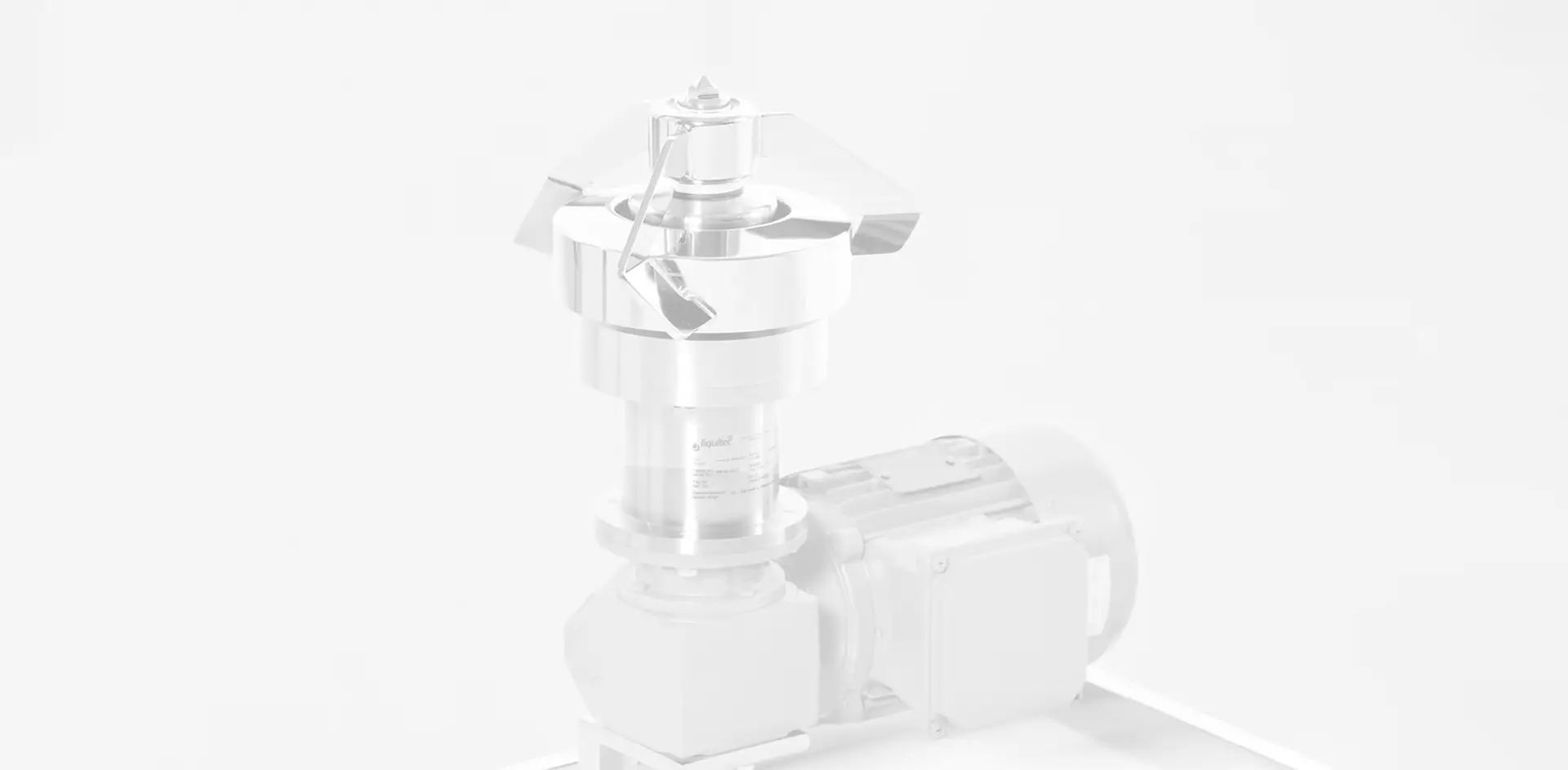
Rührwerke
Das Herzstück Ihres Prozessgefäßes
Das Rührwerk ist der Puls Ihres Prozessbehälters. Bei sterilen Anwendungen ist es die mit Abstand wichtigste Komponente für Produktqualität und Chargenkonsistenz. Hier darf es keine Kompromisse geben.
Wir bei liquitec wissen, dass ein zuverlässiger Prozess einen zuverlässigen Ursprung erfordert. Deshalb lagern wir das Herzstück Ihrer Maschine nicht aus. An unseren beiden hochmodernen Produktionsstandorten in Kirchberg (BE) und Wil (ZH) fertigen wir alle medienberührenden Teile selbst.
Diese tiefe vertikale Integration bildet die Grundlage unserer strategischen Agilität. Wir sind bei kritischen Komponenten nicht auf globale Lieferketten angewiesen, sondern halten einen umfangreichen Bestand an Halbfertigteilen bereit, die für die letzten Schritte der Individualisierung bereitstehen. Dank dieser Voraussicht können wir unsere Fertigungsstärken direkt mit Ihren Prozessanforderungen verknüpfen: lückenlose Rückverfolgbarkeit, perfekte Oberflächen und Termintreue, die ihresgleichen sucht.

Vorteile von Magnetrührwerken
Die Logik der Eindämmung
Schützen Sie Ihre wertvollen und hochwirksamen Inhaltsstoffe. Ihre Inhaltsstoffe sind oft zu wirksam, um ein Auslaufen zu riskieren, oder zu kostbar, um einen Verlust zuzulassen. In der modernen Biotechnologie gibt es keinen Spielraum für Chargenverluste. Durch den Austausch der mechanischen Dichtung gegen eine hermetische Magnetkupplung garantieren wir ein geschlossenes System. Absolute Dichtheit bedeutet null Risiko für Ihre Mitarbeiter und null Verlust Ihres hochwertigen Produkts.
Kosten der Reibung eliminieren: Mechanische Dichtungen verursachen Wartungsaufwand und Energieverluste durch Reibung. bio-m® Magnetrührwerke eliminieren diese Kosten vollständig. Dank reibungsfreier Rührwerke, ohne Sperrflüssigkeiten und ohne planmäßige Wartungspausen profitieren Sie von reiner Mischleistung anstelle von Wärmeentwicklung und Betriebskosten.
Vorteile von Liquitec
Die Definition von Schweizer Präzision
Gefertigt aus Blöcken, nicht aus Blech. Wir setzen ausschließlich auf subtraktive Fertigung aus massiven Edelstahlblöcken. Dieses Verfahren vermeidet unnötige Schweißpunkte und garantiert die strukturelle Integrität. Es ermöglicht uns, engste Spaltmaße zu realisieren und Lufteinschlüsse auf ein absolutes Minimum zu reduzieren, was die branchenweit beste Reinigungsfähigkeit gewährleistet.
Hygiene im Mittelpunkt (EHEDG): Hygienisches Design ist für uns nicht nur ein Standard, sondern gelebte Philosophie. Durch die konsequente Einhaltung der EHEDG-Richtlinien erreichen wir standardmäßig Oberflächenrauheiten von Ra < 0,4 μm. Wir achten penibel auf jedes Detail, um die Sterilität Ihrer Gefäße zu gewährleisten. Die lückenlose Rückverfolgbarkeit wird dabei streng intern sichergestellt.
Präzision jenseits des Katalogs. Wir sind überzeugt, dass ein Standardprodukt aus unserem Katalog für kritische Prozesse nicht immer ausreicht. Wir weigern uns, den gesamten Markt mit nur 20 % der Ausrüstung zu bedienen. Wir konstruieren Rührwerke exakt nach Ihren Bedürfnissen – Geometrie und Toleranzen werden präzise an Ihren Behälter angepasst – ohne Kompromisse. Perfekt auf Ihren Zweck zugeschnitten.
Mischaufgaben
Die Physik Ihres Prozesses beherrschen
Jeder Prozess birgt eine zentrale physikalische Herausforderung. Wir rühren Flüssigkeiten nicht einfach nur um; wir gestalten das Strömungsmuster so, dass diese spezifische Herausforderung bewältigt wird.
- Die Aufgabe: Schnelles Erreichen einer homogenen Mischung von mischbaren Flüssigkeiten, oft mit unterschiedlicher Dichte oder Viskosität (z. B. Pufferherstellung, Medienmischung).
- Die Stärke von Liquitec: Digitale Verifizierung (CFD).
Wir schätzen Ihre Mischzeit nicht. Bei kritischen Mischvorgängen können wir den Prozess mithilfe von Strömungsmechanik simulieren, um sicherzustellen, dass die Homogenität erreicht wird, bevor die erste Charge verarbeitet wird.
- Die Aufgabe: Maximierung des Wärmeaustauschs zwischen dem Produkt und dem Mantel des Behälters (Heizen oder Kühlen).
-
Die Stärke von Liquitec: Wandströmungsgeometrie.
Herkömmliche Rührwerke lassen wertvolle Feststoffe im Totraum zurück. Unser Lean Bottom System (LBS) und unsere Niederdruckrührwerke sind so konstruiert, dass die Feststoffe bis zum letzten Liter in Suspension bleiben und so Ihre Ausbeute maximiert wird.
- Die Aufgabe: Unlösliche Partikel (Kristalle, Katalysatoren oder Ausfällungen) in Bewegung zu halten, um eine Sedimentation am Gefäßboden zu verhindern.
-
Die Stärke von Liquitec: Der Vorteil des schlanken Unterbaus.
Die Wärmeübertragung beruht auf dem Durchbrechen der thermischen Grenzschicht an der Tankwand. Wir positionieren unsere Rührwerke und gestalten die Strömungsturbulenz so, dass die Flüssigkeit an der Mantelfläche ständig erneuert wird. Dies gewährleistet ein schnelles Erhitzen/Abkühlen ohne lokale Überhitzung.
- Die Aufgabe: Flüssigkeitströpfchen aufbrechen oder schwer zu zersetzende Pulver in eine kontinuierliche Phase überführen (z. B. Öl/Wasser-Emulsionen).
- Die Stärke von Liquitec: Hochscherfähige Optionen (Rotek & Rotor-Stator).
Standardmäßige Magnetmischer verfügen oft nicht über das nötige Drehmoment. Wir gehen einen anderen Weg und bieten hochenergetische Rotek- und Rotor-Stator-Magnetköpfe an, die die Scherraten eines Homogenisators mit der hermetischen Sicherheit eines Magnetantriebs verbinden.
- Die Aufgabe: Schonende Bewegung empfindlicher Zellkulturen oder mikrobielle Fermentation, die hohe Sauerstofftransferraten (KLa) erfordert.
- Die Stärke von Liquitec: Die BMAF-Stabilität.
Bioreaktoren benötigen häufig tiefe Behälter und lange Schächte. Im Gegensatz zu Wettbewerbern, die mit Wackeln zu kämpfen haben, verfügt unser BMAF über eine verstärkte Keramiklagereinheit, die lange Schächte stabilisiert und so eine effiziente Gasverteilung ohne Schädigung scherempfindlicher Zellen gewährleistet.
Mehr zum Thema Agitation
Das Risiko austricksen
Die Milliarden-Dollar-Lektion: Das North American Mixing Forum schätzt, dass mangelhaftes Mischen die Prozessindustrie jährlich zwischen 1 und 10 Milliarden US-Dollar an Ertragsverlusten und Energieverschwendung kostet. Der Großteil dieser Verluste entsteht, weil das Mischen vernachlässigt wurde. Sie können diese Statistik in Ihrem neuen Plan vermeiden.
Symptome an der Wurzel bekämpfen: Oftmals resignieren Anlagenbediener angesichts schwankender Chargenzeiten, lokaler Überhitzung oder Sedimentation. Dies sind keine rein verfahrenstechnischen Gegebenheiten, sondern physikalische Probleme, die berechnet und gelöst werden können. Sie müssen kein Design akzeptieren, das Sie später zu Kompromissen zwingt.
Die Lösung ist der Dialog. Befinden Sie sich in der Planungsphase, bietet sich Ihnen eine einzigartige Gelegenheit. Indem wir Liquitec bereits vor dem Stahlzuschnitt einbeziehen, können wir die Strömung simulieren und das Ergebnis garantieren. Wir schließen die Lücke zwischen Ihrem fundierten Produktwissen und unserer hydrodynamischen Expertise, um sicherzustellen, dass Ihr neues Gefäß vom ersten Baujahr an einwandfrei funktioniert.
Kontaktieren Sie uns
Technik zuerst. Vertrieb an zweiter Stelle.
Unkompliziert. Reine Physik. Haben Sie eine konkrete Frage zu Ihrem aktuellen Prozess? Oder vielleicht nur eine grobe Skizze für ein zukünftiges Projekt? Sie benötigen keine fertige Spezifikation, um mit uns zu sprechen. Im Gegenteil: Je früher wir uns austauschen, desto besser können wir Ihnen helfen.
Lassen Sie sich beraten. Unsere Ingenieure stehen Ihnen als Sparringspartner zur Verfügung. Ob Sie eine Berechnung überprüfen, ein Problem beheben oder einfach nur wissen möchten, ob ein Magnetrührer für Ihr Medium geeignet ist – wir helfen Ihnen gerne. Unverbindlich und ohne Verpflichtungen. Einfach eine ehrliche technische Einschätzung.
Das Profitcenter
Lass kein Geld im Tank
Bei der Herstellung hochwertiger pharmazeutischer Produkte ist das teuerste Volumen der sogenannte „Rückstand“ – das Produkt, das zurückbleibt, weil Standardrührwerke die letzten Liter nicht durchmischen können. Herkömmliche Konstruktionen zwingen dazu, dieses Restvolumen als unvermeidbaren Abfall abzuschreiben.
We disagree. Leaving active ingredient in the tank every single batch is not a "process reality"; it is money left on the table. In this case in the tank.
The bio-m® Lean Bottom System (LBS) reverses this logic. We have engineered the vessel floor as a single symbiotic unit—integrating the agitator, the bottom outlet valve, and up to two Ingold ports into one pre-fabricated block
For your Vessel Builder, this eliminates complex welding work and validation risks. But for you, the Process Owner, it delivers the ultimate return: full homogeneity and drainability down to the absolute last drop. You recover almost 100% of your valid product, every single batch
Advantages
Designed for the Owner. Loved by the Builder
Yield loss is often viewed in isolation, but in a multi-stage pharma process, it compounds.
- The Problem : Standard agitators stop mixing once the level drops below the blade, forcing you to discard the "heel" volume. In a 3-stage process train, this can waste almost 30% of the batch or in 500 liters you lose almost 140 liters.
- LBS Solution : Our deep-set impeller maintains full turbulent flow and homogeneity down to the absolute last drop. You recover almost 100% of your valid product, every single batch. In a couple of batches, this system pays for itself in recovered yield alone.
There is a difference between "moving" liquid and "mixing" it. Standard magnetic mixers lose their mixing vector at low levels, leading to stratification (separation of ingredients). The LBS ensures that even the final liter of product exiting the tank is perfectly homogenous, ensuring your fill-finish quality is consistent from start to finish.
In sterile processing, a piping intersection is a risk. A "dead leg" is a biological incubation zone.
- The Liquitec Standard : We engineered the LBS valve block to exclude dead legs completely. The flow path is flush, fully drainable, fully cleanable, and actively swept by the mixer.
-
The Result : You eliminate the primary source of cross-contamination between batches. Your cleaning validation becomes simpler, and your patient safety margin increases.
We make it easy for your vessel manufacturer to give you a perfect tank
- The Reality : Welding multiple flanges (Mixer, Valve, Drain, Sensors) into a dished bottom causes heat distortion, warping, and polishing headaches.
- The Advantage : By delivering the LBS as a single, pre-fabricated Multi-Port Master Flange, we reduce your tank builder's welding work substantially. This minimizes the risk of vessel warping and ensures your critical bottom geometry is factory-perfect before it even arrives at your site.
Options
Configuration & Sizing (Standalone vs Paired)
We adapt the LBS strategy to your vessel scale.
Standalone Configuration
For smaller vessels, the LBS acts as the sole mixing unit (optimized for 60L – 250L working volumes).
Paired Configuration (Hybrid)
For large process vessels, the LBS works in tandem with a main agitator. We optimize the LBS geometry to handle the "heel" volume, ensuring homogeneity down to the last drop after the main agitator has stopped.
Questionnaire
Valve System Configuration
Choose the level of hygiene that fits your risk profile. Both options utilize our proprietary zero-dead-leg flange design.
Standard Bottom Membrane Valve
The essential solution for fully drainable harvesting. Ideal for standard media or buffers where active valve sterilization between steps is not required.
Valve Cleaning System (VCS)
The advanced solution for high-potency or sterile critical applications. This configuration includes an integrated Rinsing Valve Port, allowing cleaning agents (CIP) and steam (SIP) to actively flush the valve body. This eliminates potential residue traps, ensuring the outlet is as sterile as the vessel itself.
Freedom of Automation
We believe in open architecture.
Your Choice
You are free to select the valve actuator brand (e.g., your site standard) to ensure seamless integration into your existing automation grid.
Our Guarantee
Regardless of the actuator brand, we handle the mechanical integration. We guarantee a dead-leg-free connection between the actuator and the valve block, ensuring that your choice of automation never compromises process stability or hygienic design.
The Integral (F5 - Removable Unit)
A fully removable flange assembly. It allows for the extraction of the entire agitator unit from the tank bottom, offering total maintenance freedom without ever breaching the vessel top.
One System. One ATEX Certificate
Stop chasing individual certificates. We certify the entire functional unit—the LBS body, the Agitator, the Valve body, and the Actuators—under a single ATEX system certification (Zone 1 or Zone 2).
The Benefit
Drastically reduced documentation workload. You receive one dossier for the whole assembly.
Materials & Surface Quality Standard
Stainless Steel 1.4435 (BN2), Surface Finish Ra < 0.4 µm (Grinded).
High-Spec
Electropolished surfaces and exotic alloys (e.g., Hastelloy) are available upon request for corrosive media.
Digital Process Verification (CFD)
You can add a Computational Fluid Dynamics (CFD) study to your LBS package. We simulate your specific medium and tank geometry to visualize mixing times and shear rates before we cut the steel.
The Sterile Standard. Absolute Containment. Zero Compromise
In sterile processing, the greatest threat to your batch comes from the outside world. Traditional mechanical seals are dynamic barriers; they wear, they require barrier fluids, and ultimately, they represent a "managed risk" of contamination.
The bio-m® BMA (Bottom Magnetic Agitator) removes this risk entirely. By replacing the physical shaft entry with a hermetic magnetic coupling, we create a closed system that is physically incapable of leaking.
This is the "Daily Driver" of the modern pharmaceutical industry. Scalable from 2L pilot vessels up to 150,000L industrial tanks, the BMA delivers the torque and mechanical authority of a traditional shaft mixer, but with the absolute sterility of a magnetic drive. It is the default choice for 90% of critical applications where batch loss is not an option.
Advantages
The Engineering Standard
Internal destructive testing has confirmed that the standard bio-m® bearing system withstands dry-running for over 100 minutes before mechanical seizure. While dry operation is outside standard operating procedures, this significant safety buffer protects the asset against accidental startups or drainage errors, ensuring robust performance under real-world conditions.
We design for longevity rather than replacement. Although the Zirconia (ZrO2) and Silicon Carbide (SSiC) bearing surfaces are engineered for long-term wear resistance, the outer bearing assembly remains fully accessible and replaceable on-site. This maintainability ensures the agitator remains a viable, high-performance asset for the lifespan of the vessel.
For critical GMP applications, process validation requires absolute certainty. Our optional Speed Sensor Unit utilizes a Hall effect sensor to detect a trigger magnet located inside the impeller, providing a true confirmation of rotation. This distinguishes the system from standard drive-shaft measurements, ensuring the automation system receives verified feedback from inside the tank.
To eliminate the risk of coating detachment or particulate generation, we utilize solid ceramic bearing materials rather than surface-coated alternatives (such as DLC Diamond-like coatings). A study by the ZHAW - Zurich University of Applied Sciences confirms that our specific Zirconia/SSiC tribology generates no detectable particulates, ensuring the sterile integrity of the product is never compromised by the equipment materials.
A critical design parameter in magnetic mixing is the gap between the drive magnet (can) and the impeller. We prioritize hygienic performance by engineering a widened gap that maximizes fluid flow and CIP efficiency behind the impeller. High-grade magnetic materials are utilized to maintain full torque transmission without compromising this essential cleaning clearance.
To prevent "thermal breathing"—the creation of non-sterile voids during temperature cycling (SIP)—we match the thermal expansion coefficient of our Zirconia female bearings to that of the stainless steel housing. This material compatibility allows for high-precision fits that ensure a almost gapless air pocket, bacteria-tight construction.
As a manufacturer with full control over our production chain, Liquitec retains the flexibility to adapt standard designs to specific project constraints. We view non-standard requirements—such as specific shaft lengths or flange adaptations—as engineering parameters rather than obstacles. This vertical integration allows us to deliver customized, high-precision solutions with the reliability of a standard product.
Options
Solving the Access Problem
The interface between the tank and the agitator is not just about containment; it is about accessibility. We offer solutions that eliminate the need for dangerous tank entry:
The Hermetic Standard (F1 - Weld-In Can)
The default for maximum containment. The shell is welded directly into the vessel bottom
The Serviceable (F2 - Plug-In Can)
Ideal for vessels too small to enter (no hand-hole access) or too large for safe technician entry. This design allows you to remove the containment shell and service the bearing seals entirely from the outside, eliminating confined space risks.
The Integral (F5 - Removable Unit)
A fully removable flange assembly. It allows for the extraction of the entire agitator unit from the tank bottom, offering total maintenance freedom without ever breaching the vessel top.
Questionnaire
Magnetic Safety Systems (Decoupling)
Handling powerful magnetic drives carries risks. We offer engineering solutions to protect your team and plant
Standard (BMA 4000+)
Large units come standard with a Driver Magnet Descent System. This mechanism creates a "magnetic break," allowing the safe, controlled lowering of the drive magnet away from the vessel to prevent injury or equipment damage.
Optional (Up to BMA 2500)
For smaller and medium sizes using the Bayonet System, the descent mechanism is available as an option. It adds an extra layer of safety for operators decoupling the drive unit during maintenance.
A Consequence of Your Process
We supply the torque your infrastructure demands. Beyond standard AC drives, we offer specialized options.
Pneumatic Drives
Available for environments where compressed air is the preferred power source or for specific explosion-proof requirements.
DC Motors
High-efficiency direct current options for specific pilot or portable skid applications.
Hygiene Zones
Stainless steel encapsulated motors for wash-down areas.
The Right Tool for the Job
We invite you to consult with our engineering team to select the exact geometry for your rheology. Our portfolio includes:
bio-m Standard (ST1)
The universal solution for mixing and heat transfer.
Marine Propeller (MP)
For gentle axial flow and cell culture applications.
Rotek (RT)
Medium shear force for faster buffer preparation.
Rotor Stator (RS)
High shear force for dispersion and emulsification.
Dissolver (DS)
Saw-tooth geometry for cutting and dissolving solids.
High Efficiency (HER)
Optimized for maximum flow with minimum energy input.
Materials & Alloys Standard: 1.4435 (AISI 316L)
Exotic Options
For corrosive media, we manufacture in Hastelloy C22 (2.4602), 1.4539 (904L), or Duplex among others. If your process chemistry requires it, we can build it.
Engineered for Growth
Your Biology, Our Physics
Fermentation is not just Mixing. It is the precise control of the micro-environment. Whether you are running an aggressive aerobic process requiring high gas dispersion rates or a strictly anaerobic cultivation demanding perfect homogeneity, the bio-m® BMAF Series is the chassis upon which your process stability rests.
From Pilot to Industrial Production. We scale with your biology. The series spans from the BMAF 30 (Pilot Scale) to the massive BMAF 20,000 (Industrial Scale).
We Don't Guess. We Calculate. In fermentation, "off-the-shelf" is a risk you cannot afford. Fit-for-purpose optimization is always included in our scope. Every BMAF project begins with pre-engineering advice. We analyze your specific rheology, gassing rates (vvm), and shear sensitivity to design the exact shaft length, impeller spacing, and hub connection required to maximize your yield.
Advantages
Precision Over Power
In fermentation, standard dimensioning provides a safety baseline, but it rarely achieves peak efficiency. We take the engineering further.
By fine-tuning the complete range of agitator parameters—from geometry to positioning—we align the equipment perfectly with your specific process dynamics.
- The Value : This subtle optimization yields superior performance on what matters most: your biological yield. It often allows us to achieve these results with a leaner, more efficient drive configuration, reducing your energy footprint and capital expenditure without compromising process capability
Fermentation involves long shafts operating in demanding, high-turbulence environments. In these high-aspect-ratio vessels, stability is the prerequisite for performance.
- The Liquitec Standard : We ensure operational smoothness through calculation, not estimation. For every BMAF, we model the critical speed thresholds relative to the shaft dimensions and bearing reinforcement.
- The Result : Uncompromising rotational stability. We deliver energy to the fluid, ensuring that the mechanical seal and tank floor are protected from vibration, even during aggressive agitation.
The interface between the shaft and the impeller is critical for both sterility and mechanics. We offer two definitive solutions based on your operational philosophy.
- The Permanent Solution (N5 - Welded Hub) : The impeller is fully welded to the shaft2. This creates a single, continuous stainless steel unit with zero crevices, offering the ultimate hygienic standard for dedicated GMP processes.
- The Flexible Precision (N2 - Sealed Slide Hub) : A precision-engineered peel-on connection sealed with O-rings. This design utilizes a tight tolerance fit for mechanical rigidity while ensuring a verified sterile boundary. It offers the ideal balance: the flexibility to reconfigure impellers on demand without compromising hygienic integrity.
In aerobic processes, gas introduction changes the fluid density, creating resistance that challenges standard magnetic couplings.
- The Calculated Solution : We address this physics challenge with precision. By calculating the exact torque curve required for your maximum aeration rates, the BMAF delivers uninterruptible torque transmission. We ensure that your mass transfer KLa is limited only by your biology, never by the capability of the drive train.
Options
Beyond the Standard
We do not force your biology to adapt to a limited catalog. We offer a comprehensive suite of impeller geometries, each engineered for a specific rheological purpose.
Gas Dispersion (High Mass Transfer)
For aggressive aeration, we deploy the Rushton Turbine (RT) or the Hollow Blade (HB). These radial flow masters are designed to shear gas bubbles into micro-bubbles, maximizing the interfacial surface area for oxygen transfer.
Axial Flow & Homogeneity
To conquer stratification in tall tanks, we utilize the Hydrofoil Propeller (TR) or our High Efficiency Impeller (HEI). These generate powerful top-to-bottom turnover with minimal power consumption
Gentle Cultivation
For shear-sensitive cell lines, the Marine Propeller (MP) or Segment Impeller (SR) provides the necessary suspension with the lowest possible hydromechanical stress.
Universal Mixing
The Pitched Blade Impeller (SBR) remains a robust workhorse for general mixing tasks.
Questionnaire
Digital Verification (CFD)
For critical investments, hope is not a strategy. We offer Computational Fluid Dynamics (CFD) simulation as an optional service. Before steel is cut, we simulate the flow patterns, shear gradients, and mixing times inside your specific vessel geometry. This digital twin validates your design, ensuring that the hardware we build will perform exactly as predicted.
Surface Perfection as Standard
In a bioreactor, the surface is part of the sterile barrier. We standardize on excellence. Our default offering for wetted parts is a surface roughness of Ra < 0.4 µm, finished with Electropolishing (E2). This ultra-smooth profile minimizes biofilm adhesion and maximizes corrosion resistance, ensuring your CIP cycles are effective every time.
Comprehensive Validation
We deliver more than a machine; we deliver a compliant component of your GMP audit trail. Every BMAF comes with a complete validation package, including:
- Material Certificates (3.1) for all product-contact parts
- Certified Surface Roughness Reports
- Delta Ferrite Content Verification
- FDA / USP Class VI compliance for all seals.
Defined by Access
We align the mechanical interface with your maintenance philosophy.
The Hermetic Standard (F1 - Weld-In Can)
The containment shell is welded directly into the vessel bottom. Zero gaskets, zero crevices—the permanent choice for dedicated lines.
The Serviceable (F2 - Plug-In Can)
Ideal for vessels without hand-hole access. This design allows the containment shell to be removed from the outside, permitting seal maintenance without ever breaching the sterile tank boundary.
Solving the Geometric Puzzle
When Bottom-Entry is Not an Option
The Exception to the Rule. At Liquitec, we believe the bottom-mounted magnetic agitator is the gold standard for sterile mixing. It is the most hygienic, stable, and ergonomic solution for 90% of pharmaceutical applications. However, process reality does not always follow the rules.
Engineered for Constraints. When your tank geometry, complex piping layout, or specific process chemistry makes a bottom entry impossible, we deploy our Top-Mounted Series. We do not position this as a competitor to our standard BMA line, but as a specialized, high-performance tool for specific engineering challenges. Whether you are retrofitting a legacy vessel or designing a skid with zero ground clearance, the Top-Mounted series brings hermetic magnetic safety to the top flange.
Advantages
Engineered for the Exception
In processes requiring absolute drainage or complex bottom piping, a bottom-mounted mixer can be a physical obstacle.
- The Constraint: Bottom magnets and their weld-in flanges occupy valuable space on the tank floor and can interfere with drain valves or sumps in small vessels.
- The Solution: The TMA moves the drive train to the roof. This leaves the tank bottom completely free, allowing for optimized, center-drain geometries and simplifying the layout of harvest piping.
In crystallization or suspension processes, heavy solids settle and pack at the tank bottom.
- The Risk: Starting a bottom-mounted mixer while the bearing is buried in abrasive "sludge" can lead to rapid ceramic wear or failure.
- The Solution: With a Top-Mounted drive, the bearings are located safely in the headspace, far from the sediment zone. The impeller hangs down and, upon startup, lifts the solids away from the floor without the bearing ever grinding against the particulates.
The industry is filled with legacy vessels operating with leaking mechanical seals on top flanges.
- The Challenge: Cutting a hole in the bottom of a certified pressure vessel to install a bottom mixer is often a regulatory and financial impossibility.
- The Fix: We engineer magnetic drive units that fit your existing DIN or ANSI top flange patterns. This allows you to upgrade from a mechanical seal to a hermetic magnetic drive using the existing vessel interface—preserving your tank's pressure certification.
Top-mounting a magnetic shaft without a bottom support introduces specific physics: deflection and thermal expansion.
- The Liquitec Standard: We calculate the critical speed and shaft diameter for every unit. We are transparent about the limits: without a Lower Bearing Support (LBS), the shaft length is physically limited by the critical speed. We engineer within these safe limits to ensure the shaft remains stable without whipping.
Options
Power Density (Torque Range)
We size the magnetic coupling to the viscosity and volume of your specific process, ensuring you never pay for unneeded weight on your top flange.
- The Range: From micro-scale 30 Ncm drives for pilot reactors up to 2,500 Ncm for industrial blending.
- The Benefit: This wide granularity allows us to match the drive train to the shaft length, minimizing the "pendulum weight" on the top nozzle.
Questionnaire
The Interface: Plug-In Simplicity
We have standardized the most versatile interface for top-mounted applications.
- The Solution (F2 - Plug-In Can): Our standard design utilizes a Plug-In Containment Shell.
- The Advantage: This design allows the hermetic shell to be inserted through the nozzle and bolted to the existing DIN or ANSI flange. It eliminates the need for welding, making it the perfect "Drop-In" retrofit for upgrading legacy vessels from mechanical seals to magnetic drives.
Impeller & Connection Logic
We adapt the mixing element to the process goal, but mechanics dictates the assembly.
- The Geometry: Whether you require Low-Shear Suspension (Marine Propeller) or Gas Dispersion (Rushton Turbine), we calculate the optimal impeller diameter based on your process data.
- The Connection: The method of attaching the impeller to the shaft (Welded vs. Detachable) is not a simple catalog choice. It is strictly limited by the shaft dimensions and the nozzle diameter. Our engineering team determines the viable connection type to ensure mechanical stability and installation feasibility.
Drive Technology (The Headroom Solvers)
When top-mounting, vertical clearance is often the enemy. We offer a range of drive architectures to solve your specific layout constraints:
- Low-Profile Solutions: For skids with limited ceiling height, we can deploy compact planetary gear systems that significantly reduce the vertical footprint compared to standard worm gears.
- Cleanroom & Safety: For open cleanrooms or hazardous zones, we configure the drive with Stainless Steel housings or Pneumatic motors for explosion-proof safety. Consult our engineering team to define the exact drive architecture for your zone.
Surface Perfection as Standard
Because top-mounted shafts are difficult to inspect manually, the surface finish must be flawless.
- The Standard: We do not compromise on the finish. All wetted parts are supplied with a surface roughness of Ra < 0.4 µm, finished with Electropolishing (E2). This ensures maximum cleanability and corrosion resistance for the long, suspended shaft.
Continuous Homogeneity
Passive Efficiency or Active Control
The Inline Philosophy. Not all mixing happens in a tank. For continuous processes, dosing loops, or rapid heating, mixing must occur directly in the pipe. Liquitec offers two distinct technologies to achieve homogeneity "on the fly".
- The Passive Path (bio-m® SM): A static mixing solution that utilizes the flow energy of the fluid itself. Zero moving parts, zero maintenance, and absolute reproducibility.
- The Active Path (bio-m® Dynamic): A motorized inline mixer for applications requiring defined shear forces independent of the flow rate. Ideal for emulsions and dispersions where mechanical energy is required to stabilize the product.
Advantages
The Right Energy for the Mix
The bio-m® SM relies on helical mixing elements to repeatedly divide and recombine the flow stream.
- Zero Maintenance: With no moving parts and no mechanical seals, the static mixer is the most reliable component in your line. It never leaks, never fails, and requires no spare parts.
- Hygienic Design: The mixing elements are housed in a sanitary tube with surface finishes of Ra < 0.8 µm (standard) or Ra < 0.6 µm (electropolished). The element can be easily removed for inspection, or cleaned in place (CIP) with no shadow zones.
- Defined Residence Time: Unlike a tank where some fluid circulates longer than others, the static mixer ensures every drop of product experiences exactly the same mixing history.
Sometimes, flow energy isn't enough.
- Shear vs. Flow: In a static mixer, mixing energy depends on how fast you pump. In the bio-m® Dynamic, we decouple this. You can run a low flow rate but spin the mixer at high speed to create intense shear. This is critical for creating stable emulsions (oil/water) or breaking down agglomerates.
- Low Pressure Drop: Because the dynamic element actively moves the fluid, it creates significantly less back-pressure than a static mixer, which acts as a flow restriction.
Options
Static Mixer Configuration (bio-m® SM)
We tailor the mixing intensity to your pipeline length and viscosity.
Mixing Elements
Available in 6-element (L1) or 12-element (L2) lengths. For simple blending, 6 elements suffice; for difficult viscosities, 12 elements ensure full homogeneity.
The "Pre-Mix" Trick (Injection)
For dosing small additives (e.g., pH adjustment or colors), we offer an Integrated Injector. This nozzle doses the additive directly upstream of the first element in the center of the flow, maximizing efficiency and saving pipe length.
Materials
From standard 316L (1.4435) to exotic alloys like Hastelloy C22 (2.4602), Titanium, or fully PTFE-lined units for aggressive acids.
Sealing Technology
Since the shaft enters the pipe, the seal is critical. We offer standard EPDM lip seals or advanced mechanical seals depending on the pressure and sterility requirements.
Temperature Control
Optional Double Jackets allow for heating or cooling directly during the mixing process, ideal for crystallization or pasteurization loops
Connections
Both series integrate seamlessly into your piping:
- DIN 11866 Welding Ends (Standard).
- Tri-Clamp or Bio-Connect Flanges for rapid disassembly.
bio-m® BSA & TSA Sealed Agitators
The Classic Standard – Perfected
While magnetic technology represents the future of sterile mixing, specific process requirements or legacy specifications often demand the robustness of a mechanically sealed system. The bio-m® BSA (Bottom Mounted) and TSA (Top Mounted) series represent Liquitec’s engineering refinement of this classic technology.
Designed for the pharmaceutical, biotech, and food industries, these agitators utilize high-precision mechanical seals and hollow-shaft drive technology to ensure smooth operation and sterility. Whether for cell culture fermentation or complex chemical applications, the BSA and TSA lines offer a reliable, validatable solution when a physical shaft entry is required.
We have optimized the "traditional" agitator to meet "modern" Swiss quality standards: ensuring dead-leg-free vessel connections and maximum serviceability.
Advantages
Both BSA and TSA models are designed with dead-leg-free insertion flanges to ensure complete drainability and cleanability (CIP/SIP).
The bottom-mounted BSA features an optional lowering device, allowing maintenance personnel to replace the mechanical seal without removing the heavy drive unit—a significant reduction in downtime and labor costs.
The use of hollow-shaft gear motors with integrated bearings ensures a low-profile design and smooth, quiet running of the agitator shaft.
The top-mounted TSA can be configured with standard DIN 28141 flanges, making it an ideal "drop-in" high-quality replacement for existing competitor units on legacy vessels.
Full material traceability (1.4435/AISI 316L) and FDA/USP Class VI compliance for all elastomers.
Options
- BSA: Bottom-mounted for bioreactors and easy access
- TSA: Top-mounted for standard process vessels.
Questionnaire
Standardized options ranging from 25 mm to 100 mm depending on the model.
Single or double mechanical seals, cooled or uncooled, adapted to specific process media.
Stainless steel motors, ATEX (explosion-proof) versions, or standard IEC motors with painting according to customer specs.
Standard electropolished Ra < 0.8 µm or 0.6 µm; high-end finishes (Ra < 0.4 µm) available upon request.
Compatible with the full bio-m® impeller range (Rushton, Propeller, Segment, etc.).
Our bio-m® range:
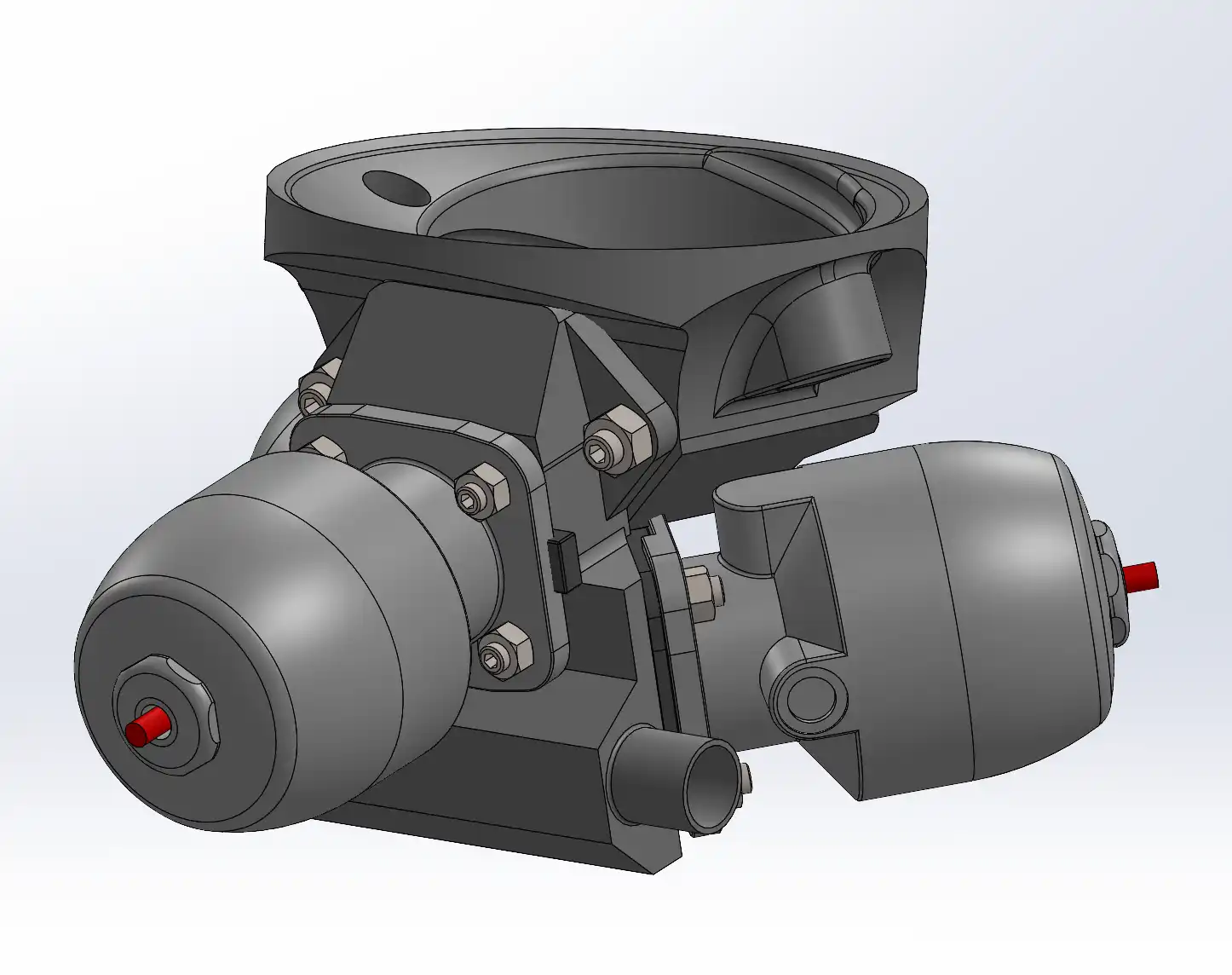
bio-m®
LBS
Lean Bottom System.
The Profit Center.
Don't Leave Money in the Tank.
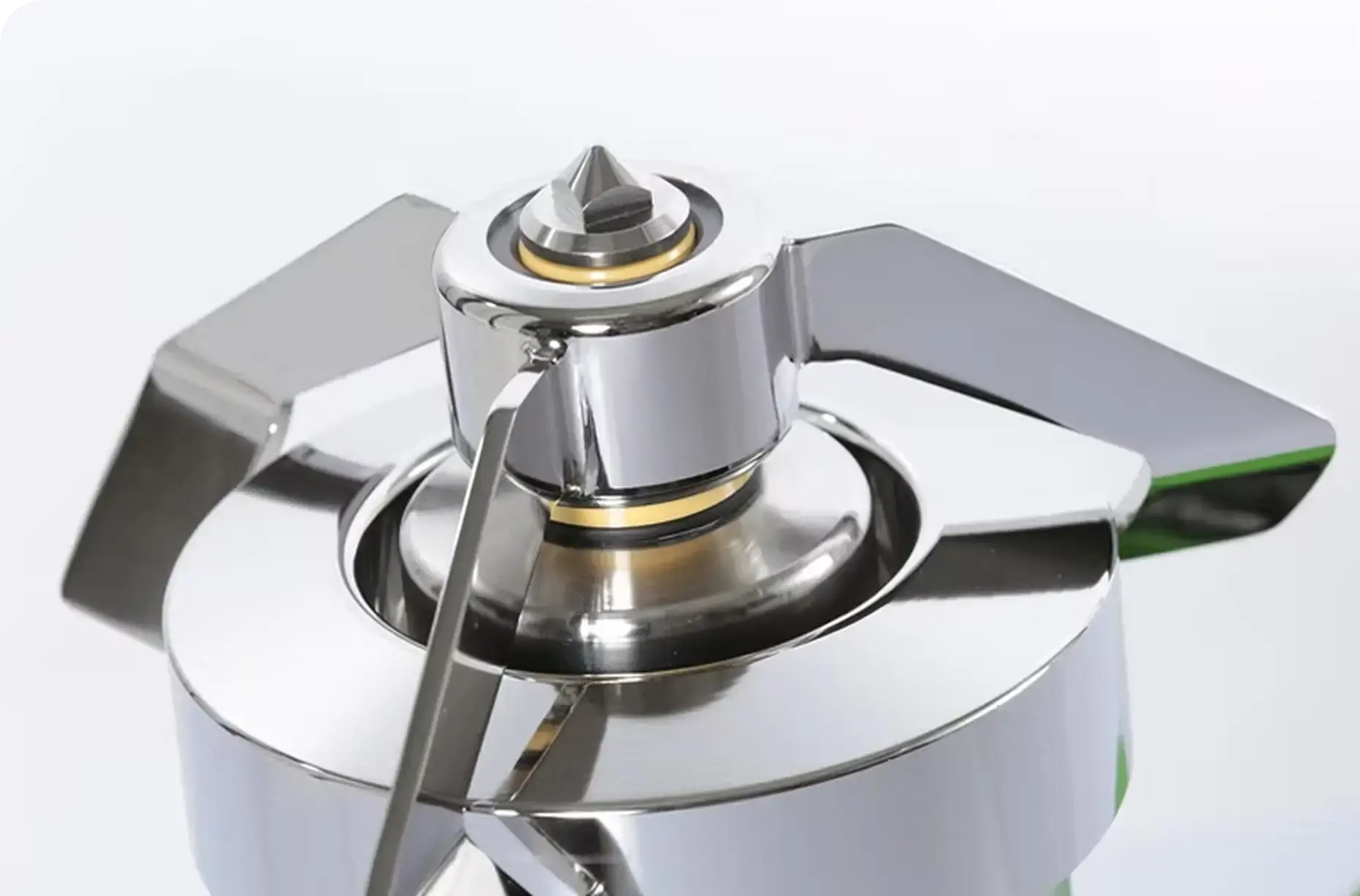
bio-m®
BMA
Bottom Magnetic Agitator.
The Sterile Standard.
Absolute Containment, Zero Compromise.
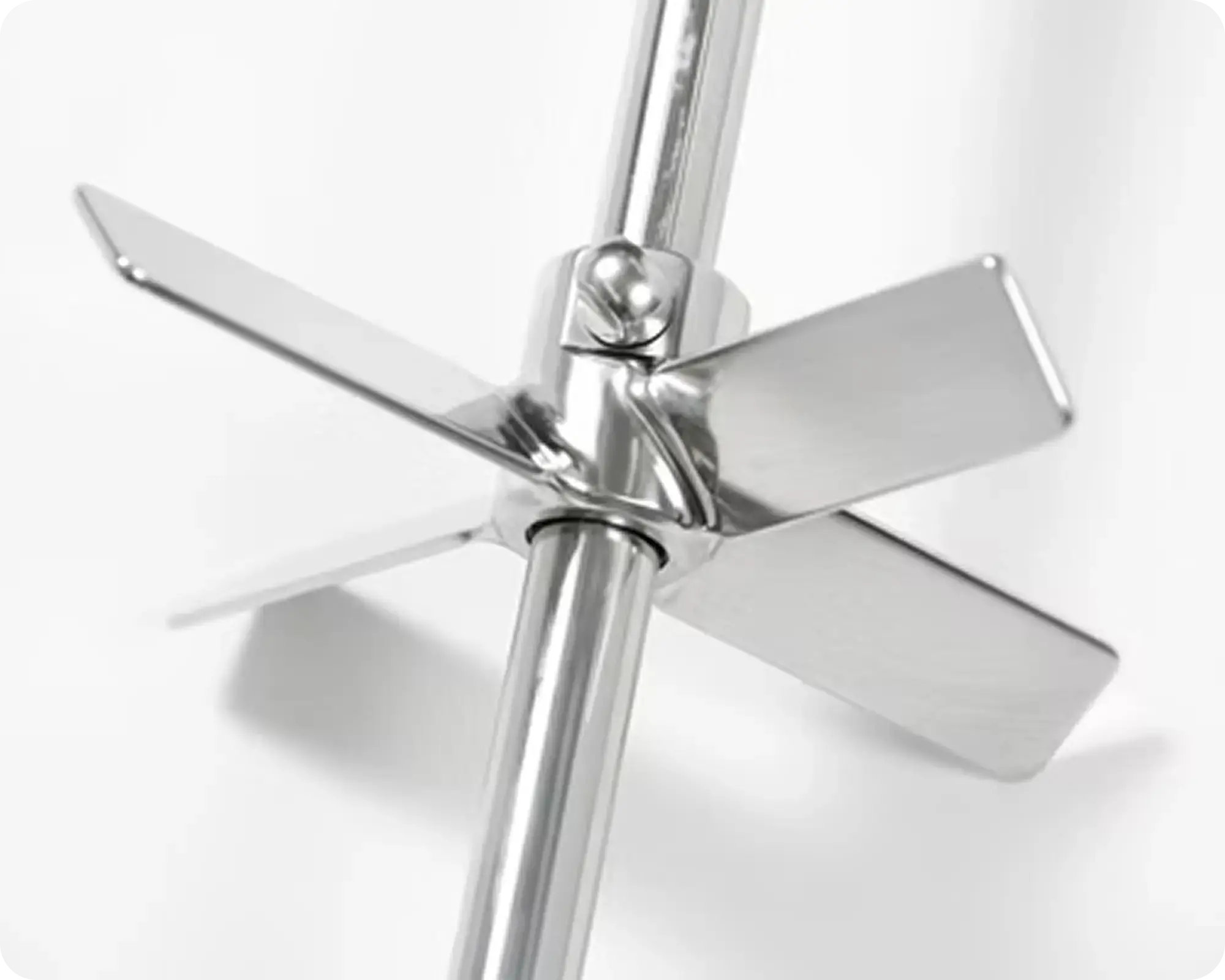
bio-m®
BMAF
Bottom Mounted Agitator Fermenter.
Engineered for Growth.
Your Biology, Our Physics .
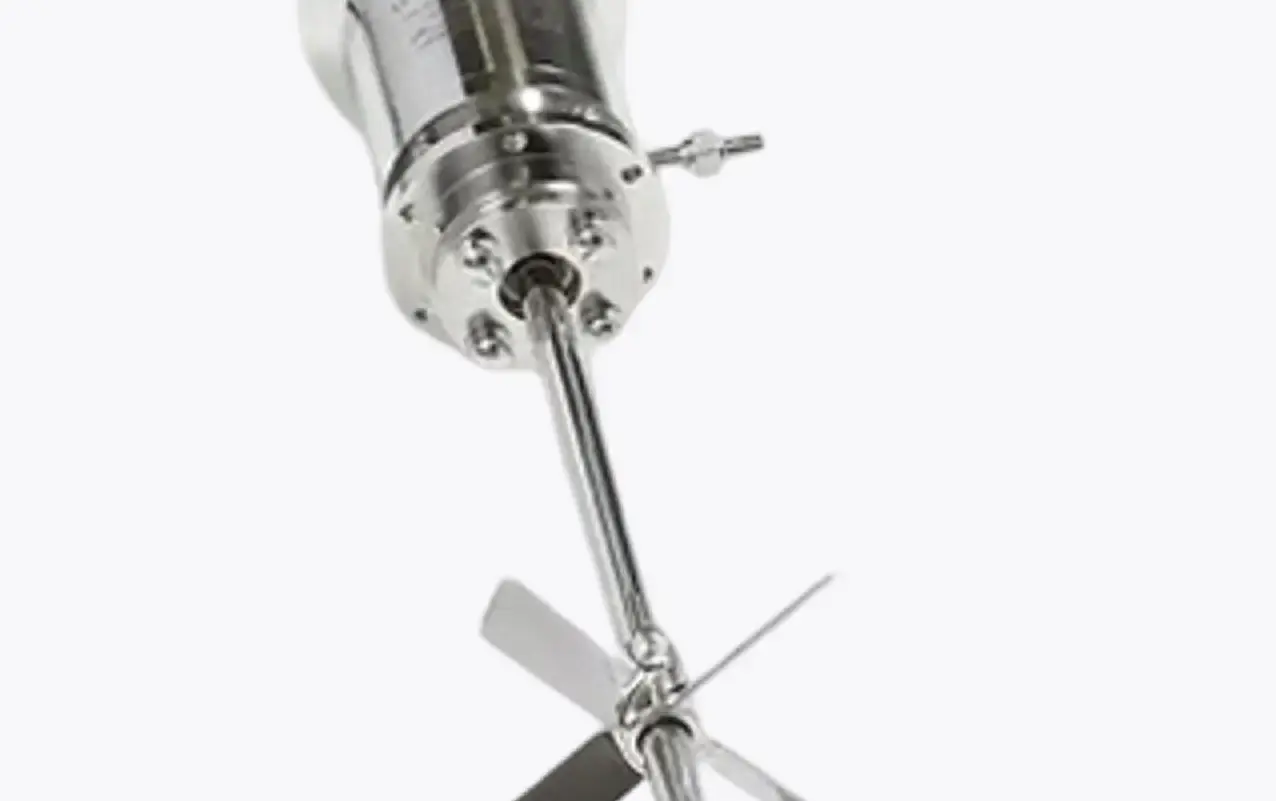
bio-m®
TMAi/TMAe
Top Mounted Agitators.
Solving the Geometric Puzzle.
When Bottom-Entry is Not an Option.
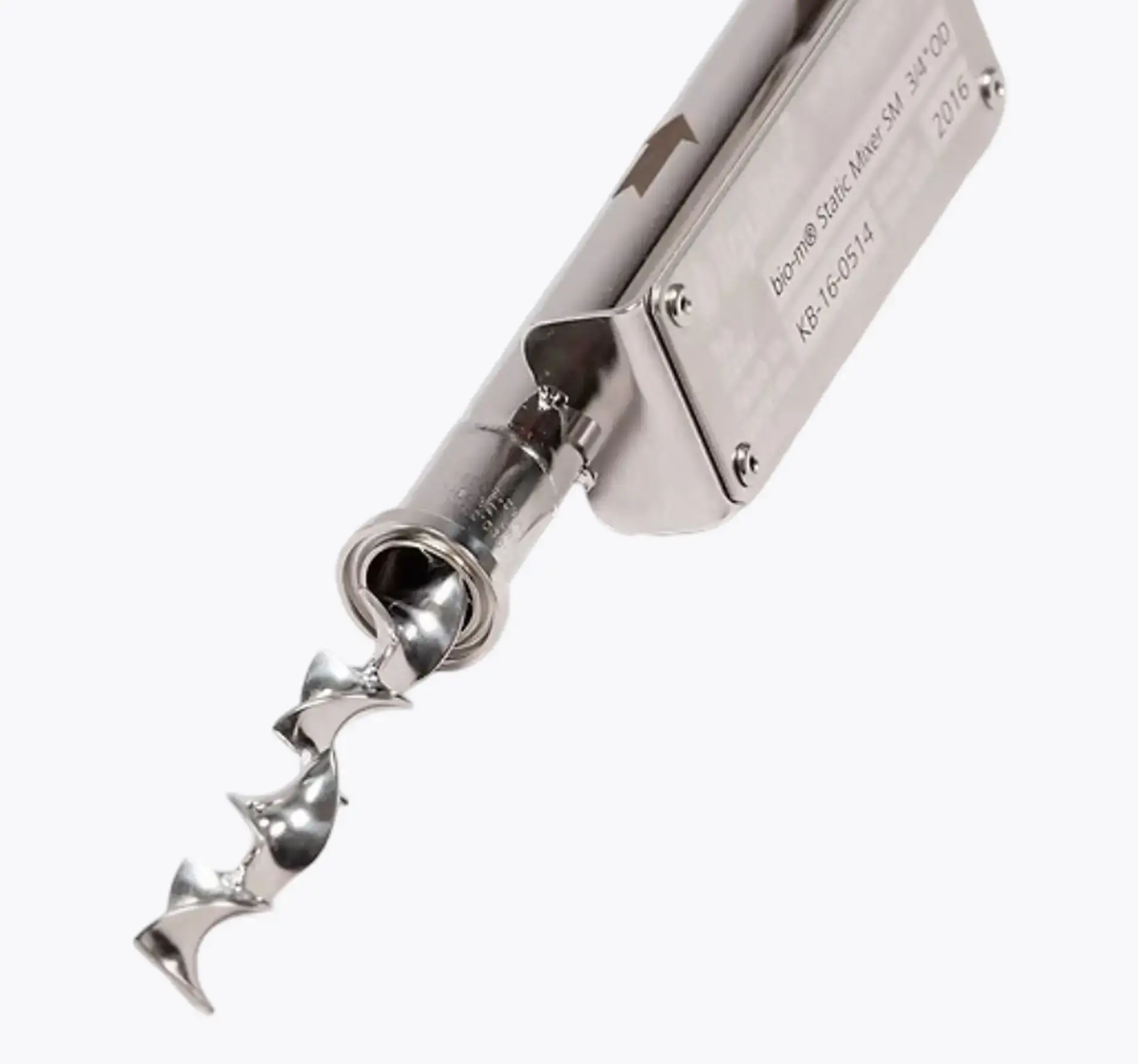
bio-m®
Inline Mixers
static and Dynamic
Continuous Homogeneity.
Passive Efficiency or Active Control.
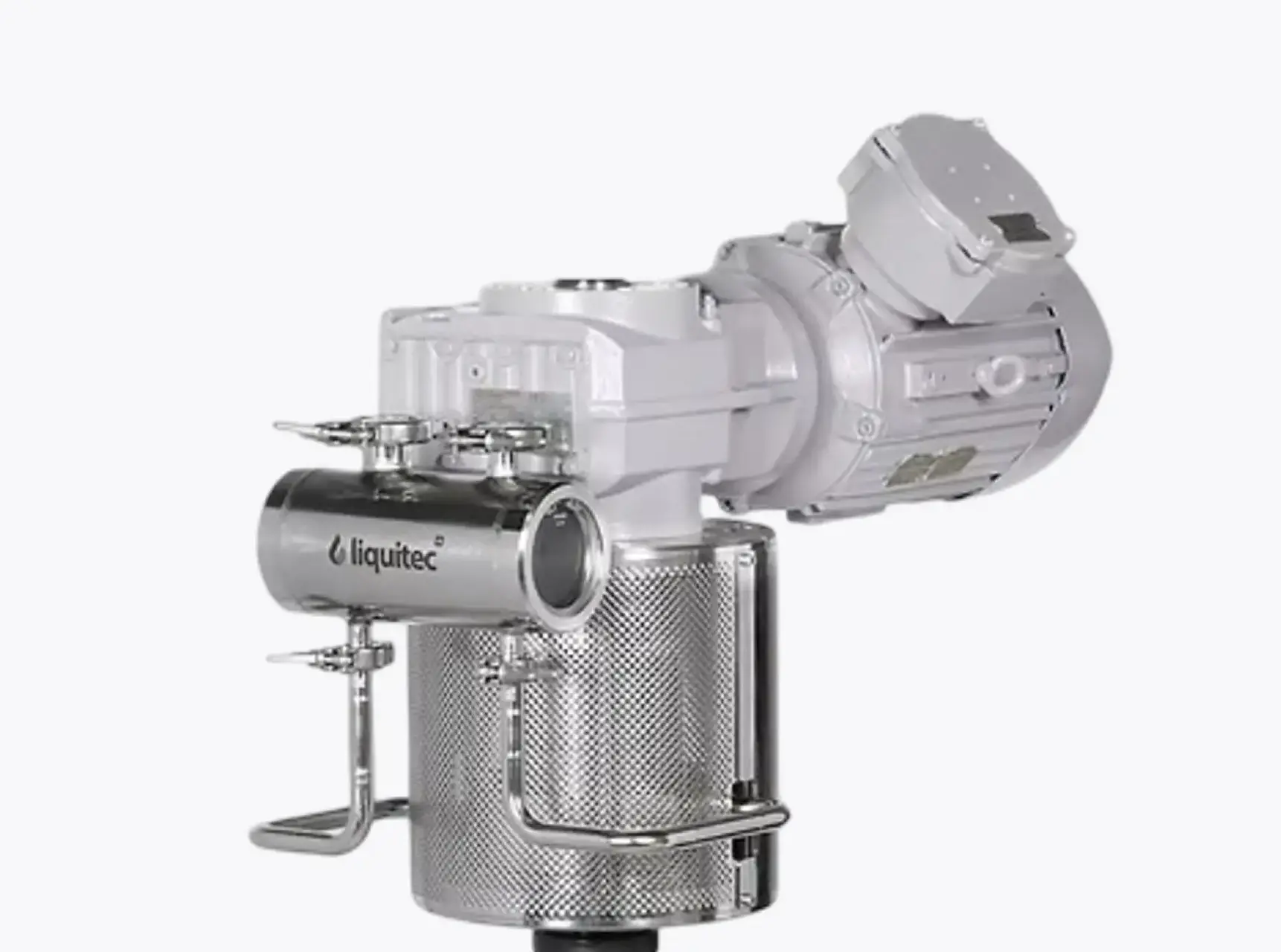
bio-m®
BSA/TSA
Sealed Agitators
The Classic Standard.
Perfected.